Martijn Stroom, PhD

Work

Six pieces of work from 2017 to 2026: Spire, Peerhall, Harrison Street, expert consulting, research, and the AI and automation behind them.

Co-founder and CEO

Spire

Spire rates how a building serves the people in it, and connects that social performance to financial performance.

60+

properties rated

11

operators in the US and UK

€500

saved per rating on external review

€150k+

internal budget replaced by my AI builds

What is Spire

A residential building at dusk, a Spire brand photograph
The experience rating for real estateThe first universal rating for buildings on how they serve the people in and around them.
Jill Brosig

"We were already investing in the things that make a building work for people. What we could not do was show what it returned. A rating that is benchmarked and repeatable turns that from a story we tell into something we can monitor, report and act on."

Jill Brosig, Chief Innovation Officer, Harrison Street
Nils Kok

"We built GRESB because environmental performance only became investable once it was comparable. Social never had that. Spire is the first serious attempt to give the S the discipline the E got."

Nils Kok, Professor of Real Estate Finance, Maastricht University, and co-founder of GRESB, the environmental benchmark for real estate

Spire's advisory board of industry leaders, which I chaired

  • Dr. Jacques Gordon
    Dr. Jacques GordonDirector of the Graaskamp Center; formerly Global Strategist at LaSalle Investment Management
  • Dr. Chris Pyke
    Dr. Chris PykeChief Innovation Officer, GRESB
  • Fulya Kocak
    Fulya KocakOwner and CEO, Fulya Kocak LLC; formerly Senior Vice President ESG at Nareit
  • Lauren Winkler
    Lauren WinklerFounder and Managing Partner, Library Ave Consulting
  • People walking through the atrium of a residential building, a Spire brand photograph

    For residents, workforce and the community

    A rating the people outside the deal can actually read.

  • A property manager opening the Spire assessment on a tablet, a Spire product render

    For owners, operators and asset managers

    The spend on amenities, programming, service and staff, finally with a number attached.

  • An urban residential district at dusk, a Spire brand photograph

    For investors, LPs and lenders

    A score that means the same thing in two funds, two operators and two countries.

Four pillars, 40+ indicators and 284 scoring options give one score from 0 to 100 per property, benchmarked inside its own sector. Redrawn from the 2026 Spire Benchmark Report in Spire's own colours.

The challenge

Booking.com rates hotels and Glassdoor rates employers. For the buildings people live and work in, there was nothing that measured how a building affects the people in and around it, compared it with similar properties, and linked it to the financial results investors already track.

A property manager walking through a residential lounge with the Spire assessment on a phone, a Spire product render

Product and method

Owned by me
The method, the product and the scoring, including the peer-comparison formula, which I wrote and coded myself
Deliverable
The assessment a property manager fills in on a phone or tablet during a walk-around, the peer-comparison formula and its code, and the benchmark report
Outcome
A score that compares a property with its peers in the same sector, with every answer backed by checked evidence
Supported by
Harrison Street as founding partner, and pilot operators in senior living and student housing
Four people discussing a printed Spire report at a table, a Spire product render

Business and finance

Owned by me
The business plan, the financial plan and the pricing model
Deliverable
The choice to start with senior living and student housing, where the people in a building matter most to its results. A financial plan with monthly budgets in two scenarios and four revenue scenarios to 2030
Outcome
The basis for decisions on pricing, sector timing and hiring
Supported by
The founding partners, and the advisory board in four sessions in 2024
Martijn Stroom presenting how the Spire scorecard is constructed at Harrison Street's Global ESG Operating Partner Conference, Chicago, 2023

Leadership

Owned by me
Spire's direction: where it started, what it measured, and the decisions on pilots, spending and hiring
Deliverable
Product, sales, marketing and operations moving at the same time. An indicator set built on the stakeholder and materiality assessments I ran at Harrison Street and tested in pilots. When the partner's commitment was extended time and again, I wrote the automations myself with AI, taking on work the plan had costed as hires
Outcome
Spire went from proof of concept to an MVP in mid-2025, and then to a live rating tool with paying customers running through it
Supported by
Three Harrison Street staff (the global VP ESG, the European ESG lead and a data analyst), the advisory board, and contracted teams for the portal, brand marketing and the website, with a technical expert and two expert consultants, all led by me

People meeting in an open office, a Spire brand render

Sales and investor engagement

Owned by me

All sales and investor engagement, which I led myself without a commercial team
Deliverable
100+ high-level C-suite and management conversations, workshops and meetings, including headquarters sessions in New York with firms such as KKR, Morgan Stanley and Goldman Sachs, a workshop at PGGM and meetings with Bouwinvest
Outcome
Pilots with operators in the US and UK, and Harrison Street as founding partner
Met with
Operators, investors, investment managers, developers, LPs and GPs, in the US and Europe
  • Goldman Sachs
  • KKR
  • Morgan Stanley
  • PGGM
  • Bouwinvest
  • Nuveen
  • Greystar
  • JLL
  • Starwood Capital Group
  • LaSalle Investment Management
  • Heitman
  • Barings
  • Neuberger Berman
  • Ventas
  • Ontario Teachers' Pension Plan
  • Colliers

After a merger, the founding partner's attention moved elsewhere and interest among partners in the same niche cooled, so I wound down my role in 2026.

Visit spirerating.com

Founder

Peerhall

Peerhall is an academic organiser for departments: it runs the visiting-speaker programme and connects members with the speakers, and the work, that match theirs.

€15k

department staff time saved a year

57

members of the Department of Finance on Peerhall

3

departments in the pipeline

What is Peerhall

Seminars that lead somewhere.Peerhall runs a department's visiting-speaker programme: set up once and kept running, so the organiser gets the hours back. Members see who is coming and whose work meets theirs, and every speaker gets a day that is ready when they land.
  • Internal efficiency

    The year is loaded once. Invitations, reminders and logistics then go out on their own.

    • The whole year from one spreadsheet
    • Emails go out on rules, to the right people
    • The head of department hears early when a visit runs thin
  • External professionalism

    Every speaker gets one link with their whole visit on it, kept up to date.

    • Arrival, hotel, pick-up and dinner in one place
    • Directions to every place on the day
    • Phone or laptop, no account to create
  • Better collaboration

    Members and speakers see where their work meets, before they ever shake hands.

    • Every visitor, and how well they match you
    • Past work and shared topics, on both sides
    • One click to profiles, papers and websites

What it adds up to

Time back, and a better-connected department.

Two things a seminar programme should return: the hours it costs to run, and the conversations it starts.

Time 175 h a year back for the seminar organiser and the secretariat
Today6 h a week
With Peerhallunder 10 min

For a department hosting 40 visiting speakers a year, over some 30 weeks of term. Time saved on the internal colloquium and PhD sessions comes on top and is not counted here.

Connections 360 one-to-ones a year, offered first to the members whose work fits

Based on 40 visiting speakers with nine one-to-one slots each. Each dot is one meeting.

The challenge

A department's visiting-speaker programme runs on spreadsheets and inboxes. It costs the organiser hours a week, and members rarely know which visitor's work meets their own, so the meetings that matter do not happen.

The specification, written with the first customer

Owned by me

The product and its specification, as founder and product owner
Deliverable
A specification covering the visiting-speaker series, the internal colloquium and PhD training, with four roles from manager to head of department
Outcome
A product shaped around how a department actually runs its programme
Supported by
The Department of Finance, Maastricht University School of Business and Economics: the seminar organiser, the secretariat and faculty

Design and build of the product and its website

Owned by me

The design and the code of the app and its website
Deliverable
The web app for organisers, members and speakers, its matching and email rules, and the marketing site peerhall.org. The build is described under AI and automation
Outcome
One product in place of the spreadsheets, inboxes and calendar invitations
Supported by
AI coding assistants, without an engineering team

Sales and onboarding

Owned by me

Pricing, sales and onboarding, as founder
Deliverable
A department subscription, demos, and set-up of each department's year from one spreadsheet
Outcome
The first paying customer, and departments in talks
Met with
Seminar organisers and heads of department at universities

The Department of Finance, Maastricht University, has used Peerhall since September 2026.

What people said

"Not having to chase people, find last-minute replacements or run around getting the same people to fill the last spots, but knowing who is engaged and having them nudged automatically, gives me back time I now spend on actual research."

Seminar organiser, Department of Finance

"Because our members come from such diverse backgrounds, it has been hard to match guests to members, juniors especially, who share their interests. Supervisors want to encourage their PhDs, so if the system does that automatically, that would be amazing."

Faculty member, Department of Marketing

"If we did this at faculty level, that would be a multiplier. We have wanted to meet guests from other departments, but right now it is very difficult to plan and book that together."

Seminar organiser, MILE department

Visit peerhall.org

Research lead

Harrison Street, Chicago and London. Research consultant from 2020 to 2022, during the PhD, then research lead from 2022 to 2023.

Harrison Street

I built a social-performance scorecard for the live portfolio of a real assets investor.

$109bn

under management at Harrison Street

4

talks and workshops for its leadership

3

ESG staff in the working group I led

The challenge

Harrison Street, an alternative real assets investor, wanted to show the social performance of its live portfolio, property by property.

2020 to 2022

Stakeholder assessment

With
Harrison Street's ESG committees, operators, investors and consultancies
My role
Research consultant
Deliverable
An assessment of what social performance means to each stakeholder group, and what each needs to see
Outcome
The groups the scorecard had to serve, defined before any indicator was chosen

2022

Materiality assessment

With
Harrison Street's investors and ESG team, under a research agreement with Maastricht University
My role
Research lead
Deliverable
Investor materiality mapping, an ESG materiality ranking and the item selection
Outcome
The indicator set behind the scorecard

2022 to 2023

20+ property visits in the UK and US

With
Operators and building managers at senior living, student housing and build-to-rent properties in London, Bristol, Birmingham, Chicago and San Francisco
My role
Research lead
Deliverable
On-site interviews and assessments of each property's social efforts and performance, and interviews with operators at their headquarters
Outcome
Indicators tested against how the properties are actually run

2022 to 2023

A working group without a reporting line

With
The Global VP ESG, the Europe Lead ESG and an ESG data analyst
My role
Lead of the working group, in weekly steering meetings
Deliverable
The scorecard, built and implemented
Outcome
Social performance reported for the live portfolio
Martijn Stroom presenting at Harrison Street's Global ESG Operating Partner Conference, Chicago, 2023

2022 to 2025

Conversations from the C-suite to property managers

With
The C-suite and the ESG Board, operating partners and their teams, and property managers on site
My role
Presenter and workshop lead
Deliverable
Talks for the ESG Board (London, 2022), the European ESG workshop (London, 2023), the Global ESG Operating Partner Conference (Chicago, 2023) and the ESG conference (London, 2025)
Outcome
Continued access to senior leadership, which carried into Spire

Impact

The scorecard ran on the live portfolio, and its indicator set became the basis of Spire.

Expert consultant

Maastricht UniversityMaastricht Center for Real Estate

Expert assignments for EPRA, the major Dutch banks and the Dutch ministry, and an EU-funded conference.

4

expert assignments, 2021 to 2025

7.52%

return investors accepted for better affordability

3

major Dutch banks behind the report I reviewed

The challenge

Investors, banks and a ministry needed an outside view on how people and markets respond to social impact and climate risk in housing.

EPRA

2024 to 2025, with Prof. Dirk Brounen

EPRA: what investors give up for social impact

Client
European Public Real Estate Association (EPRA), which funded the study with a research grant
My role
Co-author. I designed the survey of financial and ESG managers at real estate investors and fund managers, and analysed it
Deliverable
A published research report, and talks in the EPRA Research Webinar Series (2025) and for the Society of Property Researchers (2026)
Outcome
Investors accepted a lower return than the 8.75% they required, in exchange for better affordability

Report (PDF)Webinar

INGABN AMRORabobank

2023 to 2024

ING Real Estate, and a joint report by three banks

Client
ING Real Estate (2023); ING, ABN AMRO and Rabobank jointly (2023 to 2024)
My role
Expert consultant for ING Real Estate; expert reviewer of the three banks' joint report
Deliverable
Expert input for the ING Real Estate Climate Resilience Industry Report, on the risk of a sudden fall in house prices from climate risk; a review of the joint report on climate risk and the Dutch housing market
Outcome
A behavioural and housing-market view in a report written by the chief economists of ING, ABN AMRO and Rabobank
Ministerie van Infrastructuur en Waterstaat

2021 and 2023

Dutch Ministry of Infrastructure and Water Management: a flood-risk label for homes

Client
Dutch Ministry of Infrastructure and Water Management
My role
Workshop lead in the Behavioural Insights Team sessions, Amsterdam (2021); expert interviewee, The Hague (2023)
Deliverable
A workshop on a mandatory climate label as an effective measure, and an interview on the behavioural factors that decide whether home buyers accept a flood label
Outcome
Behavioural input for the design of the label. With Alexander Carlo I also argued for it in NRC (2021)

Op-ed in NRC

InterregMaastricht University

October 2022, Healthy Building Network, Interreg-EU

HealthBuild 2022: a cross-border conference on healthy buildings

Client
Healthy Building Network, an Interreg-EU project, with Maastricht University
My role
Conference organiser
Deliverable
Programme, budget, venue, vendors, registration, reporting to the funder, and the run-of-show for the policy panel
Outcome
Keynotes by John Macomber (Harvard Business School) and Matthew Trowbridge (International WELL Building Institute), and a panel where the mayors of Mönchengladbach, Venlo and Krefeld signed a letter of intent

Video summary

Impact

My input went into a published investor report, the banks' joint report and the design of a national flood-risk label. The Maastricht Center for Real Estate team received the centre's Societal Impact Award in 2023.

Engagement

Researcher

Maastricht University

My research tests what people say they do against what they actually do, in homes, offices and public health.

5

papers in Q1 journals

65

Google Scholar citations

18

talks in 5 countries

The challenge

Decisions about housing, offices and public health lean on what people say they do or would do. My research tests those reports against what people actually do. It shows econometric and programming work in R and Stata on data I designed and collected, and close work with co-authors, a research institute and the press.

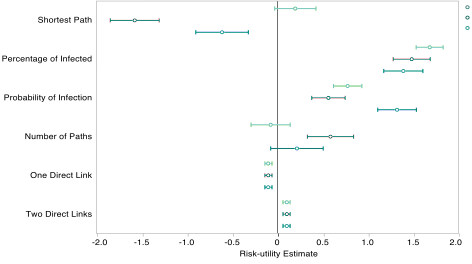
Figure from the paper on human accuracy in social network analysis

Journal of Economic Behavior & Organization, 2026

Human accuracy in social network analysis: The role of network characteristics in infection risk assessment

Authors
First author, with R. Kessels, I. Rohde and M. Strobel
Finding
How accurately people judge risk depends on the characteristics of the network around them
Skills shown
First-author lead of a four-author team; a panel mixed logit model in R and Stata on 697 participants
Reach
Presented at SJDM, San Diego (2022); published in a Q1 economics journal

Paper

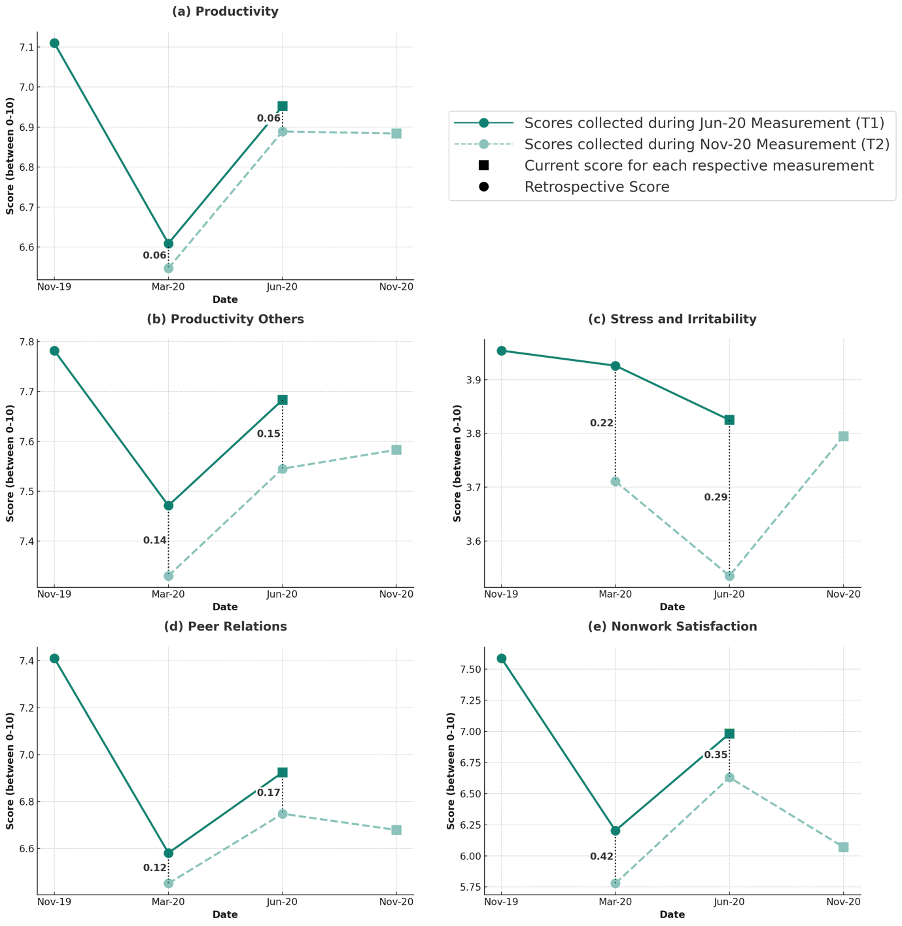
Figure from the paper on recollection of productivity and stress

PLOS ONE, 2025

Productivity and stress recollection inaccuracy: Anchoring effects in work-from-home evaluation

Authors
Sole author
Finding
Recollections are anchored, so decisions made on retrospective self-reports rest on biased numbers
Skills shown
Design, analysis and writing on my own, using a two-wave national panel I commissioned from a research institute
Reach
Presented at SJDM, San Francisco (2023)

Paper

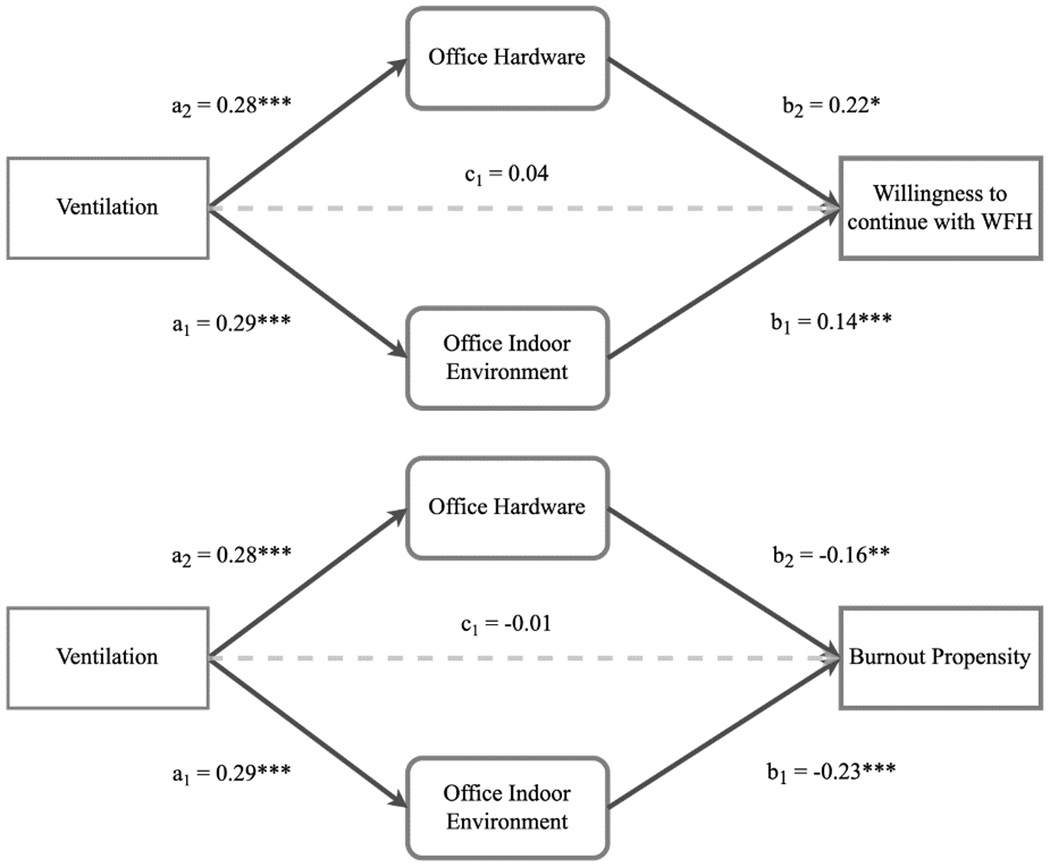
Figure from the paper on working from home and the home

PLOS ONE, 2024

Does working from home work? That depends on the home

Authors
With P. Eichholtz and N. Kok
Finding
Productivity at home depends on the physical qualities of the home
Skills shown
Panel analysis in R on 772 workers surveyed twice; I designed the survey and managed the fieldwork with the research institute
Reach
Altmetric 387, in the top 5% of all research outputs; 57 news outlets; presented at AREUEA at ASSA, New Orleans (2023)

Paper

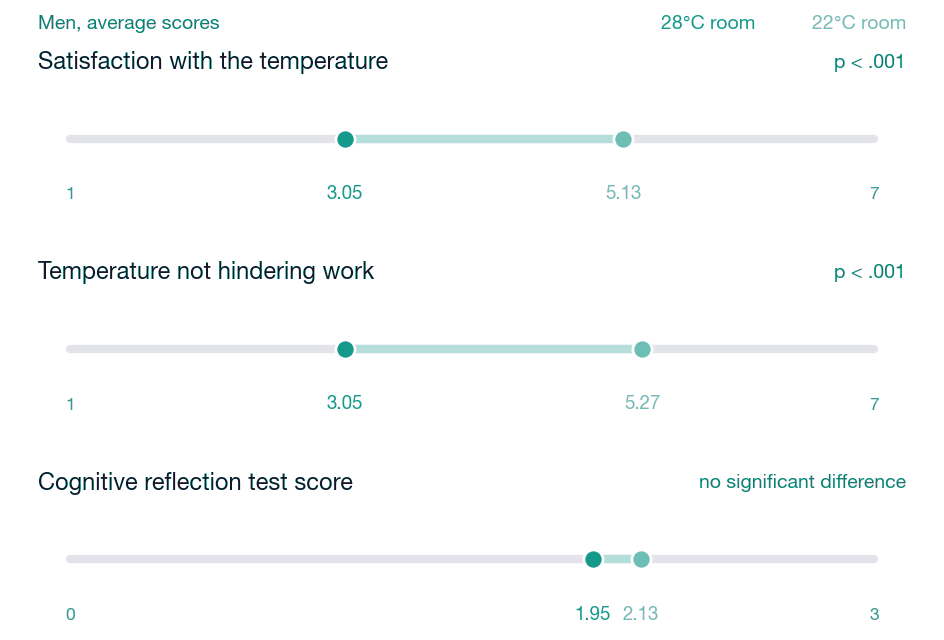
Figure from the paper on indoor temperature and self-report

Judgment and Decision Making, 2021

Turning up the heat: The impact of indoor temperature on selected cognitive processes and the validity of self-report

Authors
With N. Kok, M. Strobel and P. Eichholtz
Finding
Heat did not change decision quality, but it changed what people believed about their own performance
Skills shown
Causal design: 257 participants randomly assigned to 28°C or 22°C, with measured performance set against self-report
Reach
Presented at AREUEA at ASSA, San Diego (2020), SJDM, Montreal (2019) and ISIAQ Healthy Buildings America, Honolulu (2022)

Paper

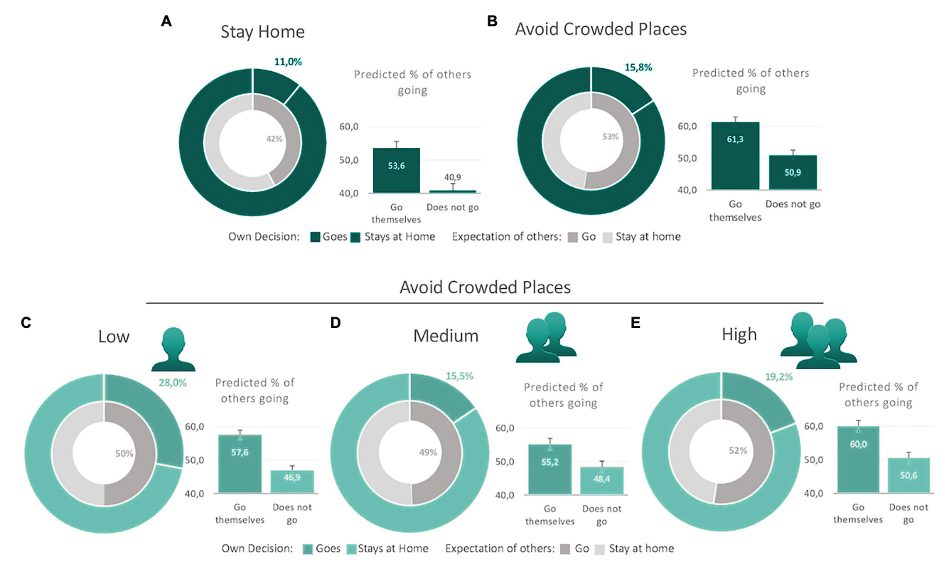
Figure from the paper on avoiding crowded places during the pandemic

Frontiers in Psychology, 2021

Avoiding crowded places during COVID-19: Common sense or a complex strategic decision?

Authors
With P. Eichholtz and N. Kok
Finding
Most people intended to avoid crowds, yet a low-crowd setting raised the share who said they would go by about 12 points
Skills shown
A randomised survey experiment on a representative Dutch sample of 1,048 people
Reach
24,053 views and downloads, more than 96% of Frontiers articles; a Dutch policy version in ESB (2020)

Paper

Teaching: eight courses in problem-based learning groups, rated 8.7 out of 10, the restructuring of Behavioral Finance (MSc), and 20+ MSc theses supervised. Selected as the School of Business and Economics nominee for the university's Best PhD Thesis award.

The research was covered by newspapers, radio and TV in the Netherlands, Germany and Canada.

Media coverage

Built and designed MVPs for scalable solutions

SpirePeerhall

I design and build the software my ventures run on, from a production web app to scheduled AI pipelines.

€150k+

internal budget replaced, in total

10,800

automated tests behind the live Peerhall app

18

newsletter issues sent since July 2026

The challenge

Spire and Peerhall needed software to check evidence, serve customers, watch the market and run the company. I built it with AI coding assistants, without an engineering team, and keep it tested and running.

Production web apps

Peerhall, a seminar platform for university departments: roles, booking that cannot double-book, one deployment per department. The Spire rating engine: 40 indicators and 284 options as tested scoring software.

Runs
Peerhall live for a paying department since September 2026
Saving
€15k a year of department staff time

Multi-agent and LLM pipelines

Peerhall HQ, my desktop app for running the company: 52 agent roles and 58 scheduled routines behind an approval gate, on an open agent framework. The Spire review pipeline checks property evidence with three model vendors and a human reviewer.

Runs
Reviewer corrections feed the next run; 164 test files
Saving
Replaces external review budgeted at €500 per rating

Workflow automation and integrations

HubSpot sync for deals and follow-ups, meetings in Google Calendar, a Gmail sweep that only drafts, an invoice generator for brand, VAT and numbering, and Peerhall's reminders and calendar feeds.

Runs
Hourly HubSpot sync; real invoices issued in place of a paid process
Saving
Contact-database work equal to half a full-time role

Scheduled scans and monitoring

The weekly property newsletter: news, policy, papers and company signals, summarised by a language model, reviewed by me and sent. Peerhall runs hourly health checks and a weekly backup.

Runs
Weekly since July 2026; items feed spirerating.com

Data pipelines

A matching and drafting pipeline: collects listings from several sources on a schedule, extracts their criteria, scores and ranks matches, and drafts tailored documents, with a review and audit step before anything goes out.

Runs
558 tests on the matching pipeline, 123 on the newsletter

Internal tools and dashboards

An HQ start page with the deals, invoices, follow-ups and decisions waiting on me; an owner console inside Peerhall; a panel that launches every project; an invoicing web app.

Runs
Reads the CRM hourly; sends tasks to my phone every five minutes

Websites and design systems

spirerating.com, peerhall.org, porthos.studio, the Aramis Intelligence site and the public newsletter page, each with its own design tokens and self-hosted assets.

Runs
Live on Vercel; spirerating.com news fed by the newsletter review
Saving
The Spire website in place of an agency build costed at €50k or more

Stack: Python, TypeScript, Next.js, Postgres with Prisma, FastAPI, Tauri, model APIs from OpenAI, Anthropic and Google, Vercel and Claude Code.